India Yogashala

Author name: Indiayogashala

Indiayogashala is a curated platform offering handpicked yoga teacher training courses and retreats across India. We work with certified schools in Rishikesh, Goa, Kerala, and beyond to ensure authentic, transformative experiences for yoga seekers from around the world

Pawanmuktasana
Uncategorized

The Complete Guide to Pawanmuktasana: My Journey with the Wind-Relieving Pose

I’ll never forget the first time my yoga instructor introduced me to Pawanmuktasana. I was dealing with constant bloating and digestive discomfort, and she smiled knowingly as she guided me into this deceptively simple pose. Little did I know that this would become one of my most trusted companions in my yoga practice. Pawanmuktasana, which translates from Sanskrit as “Pawan” (wind), “Mukta” (release), and “Asana” (pose), literally means the Wind-Relieving Pose. And trust me, it lives up to its name. This isn’t just about releasing trapped gas, though that’s certainly a welcome benefit. It’s about creating space in your body, calming your mind, and connecting with your core in the most gentle way possible. What makes this pose so special is its accessibility. Whether you’re brand new to yoga or you’ve been practicing for years, Pawanmuktasana offers something valuable. It’s one of those foundational postures that I find myself returning to again and again, especially on days when my body needs gentle care and attention. What Is Pawanmuktasana? Let me paint a picture for you. Imagine lying on your back, drawing your knees toward your chest, and giving yourself a gentle hug. That’s essentially Pawanmuktasana in its most basic form. It’s a supine pose that creates compression in your abdominal area while simultaneously stretching your lower back. What I love about this pose is its versatility. You can practice it in two main variations. The single-leg version involves hugging one knee to your chest while keeping the other leg extended on the floor. This is perfect when you’re starting out or when you want to focus on one side of your body at a time. The double-leg variation brings both knees to your chest simultaneously, creating a deeper compression and a more intense stretch. I always tell beginners that this is their pose. There’s no complicated alignment to worry about, no need for flexibility or strength. If you can lie down and bring your knees toward your chest, you can do Pawanmuktasana. Even intermediate practitioners find immense value in it, often using it as a warm-up or cool-down pose. Also Read: Yoga Poses for Two People: A Guide to Couple Yoga How to Perform Pawanmuktasana (Step-by-Step) Single-Leg Pawanmuktasana When I practice the single-leg version, I start by lying flat on my back on a yoga mat. I make sure my spine is neutral and my body feels relaxed. Then, I bend my right knee and slowly bring it toward my chest. I interlock my fingers just below the knee, making sure not to pull on the knee joint itself. As I exhale, I gently press my thigh against my abdomen. I keep my left leg extended on the floor, pressing through the heel to engage it properly. My head and shoulders stay relaxed on the mat, though some days I like to lift my head slightly toward my knee for an added core engagement. I hold this position for 20 to 30 seconds, breathing deeply and feeling the gentle massage happening in my abdomen. After releasing, I always take a moment to notice the difference between both sides before switching to the left leg. This awareness has taught me so much about the asymmetries in my own body. Double-Leg Pawanmuktasana The double-leg variation is where I feel the full power of this pose. I begin the same way, lying flat on my back. This time, I bend both knees simultaneously and draw them toward my chest. I wrap my arms around my shins, clasping my hands or holding my elbows if that’s more comfortable. On an exhale, I apply gentle pressure, bringing my thighs closer to my abdomen. I can feel the compression working its magic on my digestive organs. If I’m feeling it, I’ll gently rock side to side, which gives my lower back the most wonderful massage. Sometimes I lift my head toward my knees, which intensifies the abdominal work. I typically hold this for 30 to 60 seconds, though I’ve learned to listen to my body. Some days I need less, some days I crave more. Proper Breathing Technique Breathing is everything in this pose. I’ve learned that the magic happens when I coordinate movement with breath. As I draw my knees toward my chest, I exhale fully. This exhalation naturally creates more space for the compression. When I hold the pose, I maintain slow, steady breaths, allowing each exhale to deepen the stretch slightly. I usually practice three to five repetitions, sometimes alternating between single and double-leg variations. On particularly stressful days, I might do more, treating it almost like a moving meditation. Also Read: 12 Poses of Surya Namaskar with Names and Benefits Top Benefits of Pawanmuktasana Improves Digestion This is where Pawanmuktasana truly shines, and it’s the benefit that first drew me to the pose. The gentle compression on the abdomen acts like a massage for your digestive organs. I’ve found that practicing this pose regularly has completely transformed my digestive health. When you press your thighs against your abdomen, you’re stimulating the entire digestive tract. This encourages the movement of trapped gas and helps relieve that uncomfortable bloating we all experience from time to time. I practice this pose whenever I feel heavy after a meal, and it never fails to bring relief. Beyond just gas release, this pose supports overall gut function. It enhances the secretion of digestive enzymes and improves the absorption of nutrients. I’ve noticed that my bowel movements have become more regular since incorporating this into my daily routine. Strengthens Core Muscles You might not expect it from such a gentle-looking pose, but Pawanmuktasana is actually a fantastic core strengthener. When I bring my knees to my chest and especially when I lift my head toward them, I can feel my entire abdominal wall engaging. The pose works the rectus abdominis, the transverse abdominis, and even the obliques. But what I appreciate most is how it strengthens the hip flexors and engages the lower back muscles in a
yoga teacher training cost
Yoga

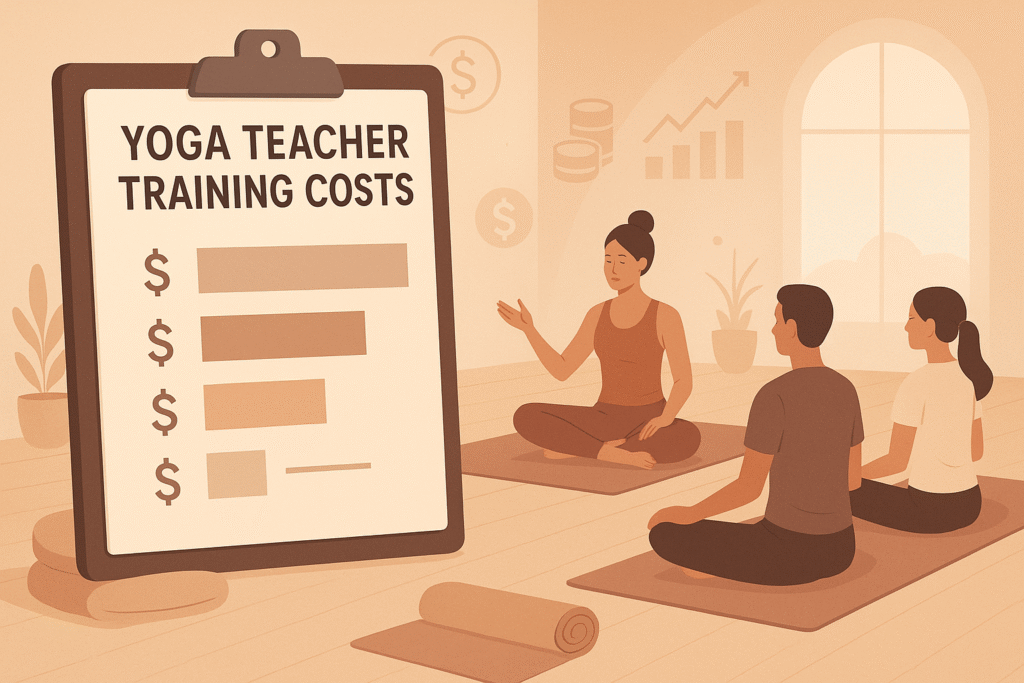
How Much Does Yoga Teacher Training Cost (100, 200, 300 & 500 Hours)

Yoga Teacher Training (YTT) is more than just a course—it’s a journey that transforms both your practice and your perspective. Some join to deepen their understanding of yoga’s philosophy and traditions, while others aim to earn certification and guide students in their own classes. Whatever the goal, one thing is certain: it’s a meaningful investment of time, energy, and money. Knowing the yoga teacher training cost in advance helps you plan wisely and choose the right program for your needs. In this guide, we’ll break down the factors that influence pricing and what to expect for different formats and locations. Why Invest in Yoga Teacher Training? Joining a yoga teacher training program is not only about becoming a certified yoga teacher but also about having a completely transformational experience. It changes the way you think, you live your life, you breathe, and relate to the world surrounding you. At the core of this training, you learn that yoga is all about self-enquiry. This teacher training program provides you the ideal space and structure so that you can explore your inner world.  Yoga teacher training sharpens your understanding regarding every asana you practice. You learn about your bodily needs and practice movements accordingly. You dive into the depths of yogic philosophy and get introduced to different styles of yoga like Ashtanga, Hatha, Kundalini, Yin, and Vinyasa. This helps in broadening your perspective towards what resonates with you the most. After the completion of your training program, you receive the Internationally Certified RYT certification that reflects your credibility as a yoga teacher.  If you wish to pursue teaching yoga professionally, then investing in a yoga teacher training program is the ideal option to consider. This will be your launchpad where you will learn how to guide the students, create sequence classes, provide a safe environment for practicing hands-on alignment, and giving real-time feedback. Always remember that you are not doing this alone. There are several individuals from different backgrounds and countries who participate in these training programs just like you do.  Overview Table for the Cost of YTT Programs Below is the overview of the cost of yoga teacher training programs according to the locations and level of training.  Training Program India (Residential) US/Europe (Residential) Online Format 100 Hours $250–$1,200 $400–$2,000 $200–$800 200 Hours $800–$2,500 $1,200–$5,000 $400–$1,500 300 Hours $1,200–$3,000 $2,000–$7,000 $700–$2,000 500 Hours $2,000–$5,000 $4,000–$8,000 $1,500–$3,000 100-hour Yoga Teacher Training   100-hour yoga teacher training is the entry point certification which is not certified by the Yoga Alliance but is considered as the first half of the 200-hour yoga teacher training program. This program lasts for around 2 weeks and is ideal for complete beginners.  Cost Insights for 100-hour YTT program   India: Shared accommodation and three course meals are included along with daily yoga/meditation sessions; typically ranges from INR 12,750–25,500 ($250–$400). US/Europe: If outside India, then prices might vary according to the locations and amenities provided, ranging from $400–$2,000. Online: If you are taking online sessions for 100-hour YTT then expect the cost ranging approximately $200–$800.  Why do people choose it? This program is ideal for individuals who wish to taste practice before committing to a certified teacher training program.  200-hour Yoga Teacher Training   The 200-hour YTT program is the fundamental program required to become a certified yoga instructor. It is accredited by the Yoga Alliance and teaches all the necessary foundational aspects of yoga. It has a curriculum that includes daily yoga asanas along with pranayama and meditation, yogic philosophies, teaching methodologies, and hands-on practicum. Once you have completed the program, you will receive the RYT 200 certification through Yoga Alliance as it will signify that you are a qualified and certified yoga teacher.  Cost Insight for 200-hour YTT program-   India: Ranges from $800 to $2,500. This includes the accommodation facility, three course meals, and other essential amenities. Major centres of YTT programs in India are Goa, Rishikesh, Mysore, Kerala, and Dharamshala. US/Europe: Ranges from $1,200 to $5,000+. This happens because of the higher cost of living as well as facilities provided. You might get luxurious venues, smaller and more focused classes, and bigger names.  Online: Begin from as low as $400. You can access the recorded lessons and learn as per your availability. Why do people choose it? Yoga practitioners who wish to pursue yoga as their professional career have to necessarily join the 200-hour YTT program as it is the fundamental certification program. Every individual graduating from the program receives the RYT 200 certification which proves their credibility of becoming a yoga instructor.  300-hour Yoga Teacher Training    The 300-hour yoga teacher training program is the advanced course for the individuals who have completed the fundamental 200-hour YTT program. It is designed specifically to deepen the understanding about different yogic aspects which will ultimately make you an extremely qualified yoga instructor. It has a curriculum which also includes anatomy, physiology, class sequencing, yogic philosophy, daily asana practice, and advanced teaching skills.  Cost Insight for 300-hour YTT program   India: Ranges between $1,200–$3,000. The program includes all-inclusive residential courses along with providing necessary amenities.  US/Europe: In other countries, the cost might range between $2,000–$7,000. This is because of the internationally recognized faculty and other luxury amenities provided by the yoga schools. It might vary according to the school and destination you choose.  Online/Hybrid: You can also choose the online or hybrid format of yoga teacher training program, which ranges from $700 to $2,000. It majorly depends on the length of your course, popularity of the yoga schools and the quality of their classes.  Why do people choose it? Yoga practitioners who have already graduated from the foundational 200-hour yoga teacher training program and wish to expand their understanding in this field can join this. It will help you to become an even better certified yoga instructor, with increased credibility. Once you complete the program, you will receive the certification which can be used for teaching yoga anywhere across the globe.  500-hour Yoga Teacher Training  

Scroll to Top