India Yogashala

Yoga

What Causes Blockage in the Chakras
Blog, Yoga

How to Unblock Chakras In Human Body: Simple Techniques to Restore Energy & Balance

At the core of all the healing systems, there is a belief that your body is so much more than just a physical system and has energy points which are known as Chakras. They play a vital role in managing your overall wellness. In today’s modern world, where the hustle and bustle of life are making you drained as well as uninspired, these chakras are beneficial in bringing peace, confidence, positive energy, and a sense of relief.  When your chakras are stable and functioning well, you start feeling vibrant, emotionally stable, and mentally clear. If your chakras are blocked, you will start feeling the imbalance in your body, physical ailments, and low-esteem. To cure it, there are simple practices which can be performed on a regular basis so that your energies are aligned. This article is going to walk you through the ways which will help you to unblock the chakras in your body.  What are Chakras? Chakra is a Sanskrit word which means “disk” or “wheel. It refers to the shipping wheels of energy which are located all along your spinal cord from tail to crown, each of them responsible for different aspects of physical and emotional health. When these subtle energy points are balanced, they tend to create perfect harmony in your body, mind, and spirit. There are seven main chakras which govern different areas of your body and soul.  Every single chakra has a unique frequency, sound, element, and color. When all of them are together, they form an interconnected system inside your body that makes your energy field balanced and healthy. 12 Poses of Surya Namaskar with Names and Benefits What Causes Blockage in the Chakras? The hustle and bustle of life is one of the main reasons why you manage your energy centers. This ultimately leads to chakra blockage and restricts prana to circulate through every part of your body. Let’s now understand what are some of the major reasons which cause chakra blockage and why they must be healed.   Unhealed Emotional Wounds Childhood traumas often leave some imprints which don’t disappear easily. Feelings of rejection, grief, neglect, and heartbreak tend to settle in your body. Each of these feelings and types of emotional pain corresponds to a specific chakra, like betrayal might block your heart chakra and fear can possibly block your root chakra. If you start ignoring these causes and feelings, they turn into energy blockages which will create disharmony in your entire body. Without healing, these traumas are going to become energetic scars which will hinder the flow of prana in your body.  Suppressed Emotions and Repression If you suppress your emotions, especially fear, anger and sadness, do not let it disappear. You must understand that your entire system runs on this flow as well as expressions. So if these emotions are trapped in your body then it will be causing congestion in your feelings. Suppressing your emotions like sadness, fear, anger, and guilt do not make them disappear. The longer they will stay unexpressed, the more congested the related chakra will feel.  Negative Thought Patterns  Every thought you have contains energies, so if you have negative beliefs or internal battles that are full of self-doubt, it will block your chakras. Repeatedly saying negative phrases like “I am not good enough”, or “People don’t like me” will tend to block chakras which are associated with these emotions. So you need to realise that you must practice positive daily affirmations so that your energy flow is better in your body. If you want to shift your behavioural changes and imbalances your every chakra to something positive in your body, then remove the negative thoughts from your mind and focus on daily affirmations.  Chronic Stress and Overstimulation If you are always in survival mode, then your energy systems will never function properly. Stress and overstimulation are two main destructive forces that can disrupt your overall wellness. When your body is constantly burning out and stressing about every small or big detail, it tends to pull out the overall energy away from your chakras. From running deadlines to overstimulations, chronic stress can take a huge toll on your wellness. Yoga Poses for Two People: A Guide to Couple Yoga How to Tell if your Chakras are Blocked? Every single chakra is associated with different domains in your body, defining which body part they are governing. When your energy centers are blocked then your prana flow gets imbalanced and disrupted. Let us now understand the symptoms which will show that your chakras are blocked or not.  CHAKRAS Symptoms of Blockage Root Anxious, fearful, disconnected, and pain in the lower back Sacral Reproductive issues, sexual dysfunction, and creative block.  Solar Plexus Feeling powerless, low self-esteem, and digestive problems.  Heart Heart or lung diseases, emotional numbness, difficulty in trusting people.  Throat Thyroid imbalance, fear of speaking, low confidence, and sore throat.  Third Eye Lack of intuition, confusion, and sleep disturbances.  Crown Spiritual emptiness, disconnection, and feeling depressed.  1. Visualization and Meditation Meditation is an effective way to unblock your chakras and clear your thoughts. Sit in a comfortable position and quiet your mind completely. Now take a few breaths and start focusing on your root chakra. For this, visualise a wheel that is spinning and is red, slowly moving towards the other chakras. Imagine its color and their location and how freely they are moving while radiating positive energy.  You can add specific mantras for your chakra or some quiet background music. There are so many guided lessons which you can take in order to meditate properly. Practice it regularly for around 20 minutes or more to see maximum benefits in yourself. This will also help you to release the energetic stagnation that will ultimately activate your spiritual connection and elevate inner-awareness in you.  2. Sound Healing and Chanting Sound has vibrational energy which ultimately resonates with each chakra. When you chant these mantras, you tend to form a resonance in your body that will cure your
yoga statistics
Blog, Yoga

Yoga Statistics 2026: How Many People Do Yoga Worldwide?

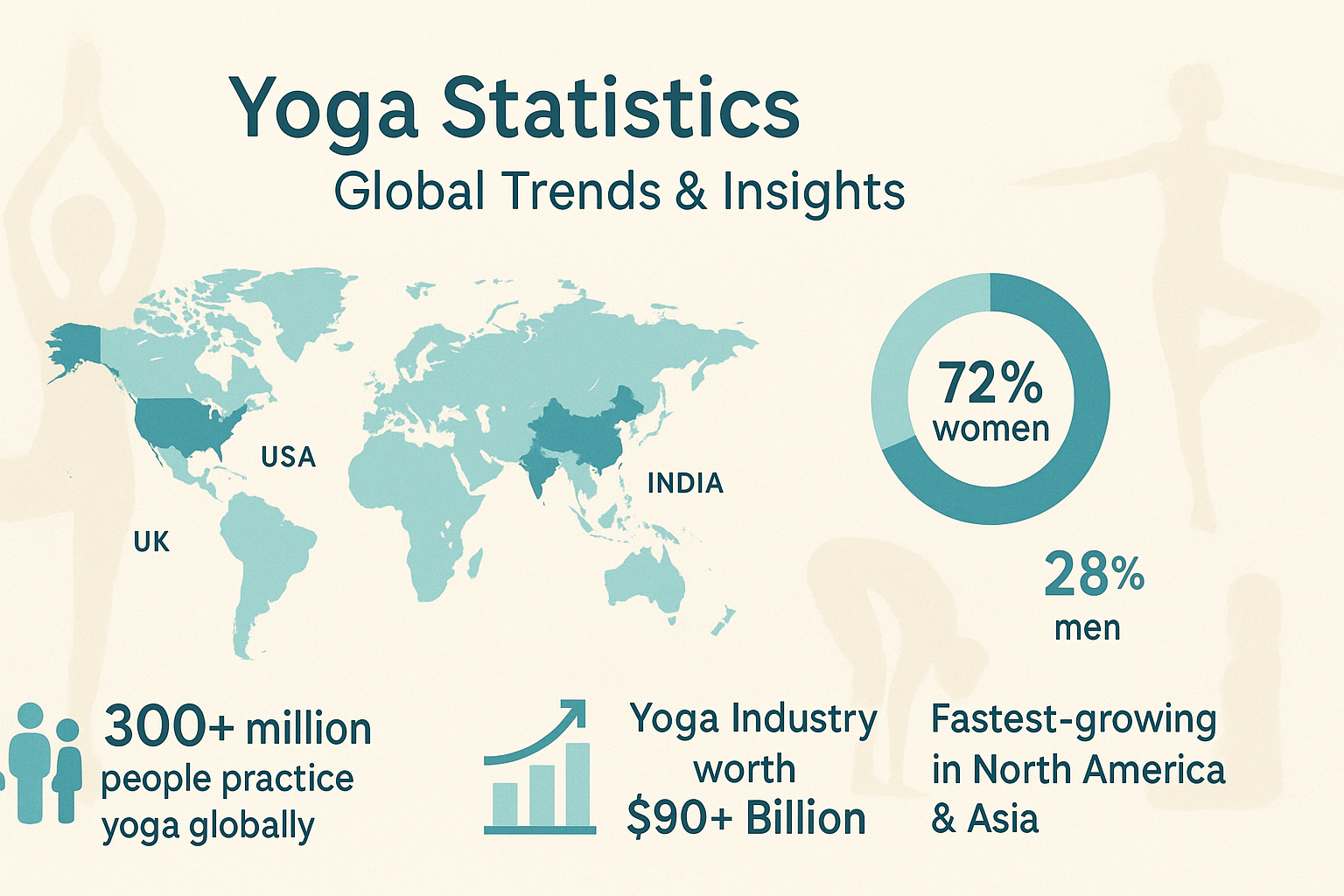
Yoga has come a long way from its roots in ancient India. What started thousands of years ago as a spiritual and meditative practice is now a global wellness movement loved by millions. Today, yoga isn’t just about stretching or meditation — it’s a way for people to manage stress, stay fit, and find balance in their busy, tech-filled lives. This article looks at the latest yoga statistics around the world, how many people are practicing it, where it’s growing fastest, and what the future of yoga looks like as we move toward 2030.  The numbers come from trusted sources like Yoga Alliance, Statista, and the Global Wellness Institute. Key Takeaways (Quick Facts) How Many People Practice Yoga Worldwide? As of 2025, more than 300 million individuals practice yoga regularly worldwide. This represents a remarkable expansion from previous decades. Between 2010 and 2021, yoga’s popularity surged by 63.8%, demonstrating accelerating adoption rates that show no signs of slowing. To put this in perspective, the global yoga community now rivals the population of the United States. This massive practitioner base spans every continent, age group, and socioeconomic background, reflecting yoga’s universal appeal and adaptability. The number of yoga studios has also expanded dramatically, with currently 48,547 yoga and pilates studios operating in the United States alone. Additionally, more than 100,000 teachers are registered with Yoga Alliance, though the actual number of yoga instructors globally is significantly higher when including unregistered teachers and traditional practitioners. Regional Distribution The global yoga landscape features distinct regional characteristics and growth patterns: Asia-Pacific: The Asia-Pacific region accounts for approximately 37.2% of the global yoga market revenue, making it the largest regional market. India, as yoga’s birthplace, maintains the highest percentage of practitioners relative to population, though China and Japan are experiencing rapid growth. Japan has witnessed a 413% increase in yoga practitioners over the last five years. North America: North America represented 27.3% of the global yoga market in 2023, with the United States serving as a major driver of both practice and innovation. The region leads in premium yoga products, teacher training programs, and digital platform development. Europe: European nations show steady growth with particular strength in Germany, the United Kingdom, and increasingly Italy. Italy is emerging as the fastest-growing regional market, while wellness tourism centered around yoga is expanding in Spain, Portugal, and Greece. Latin America: Countries like Brazil and Mexico are experiencing increasing yoga adoption, particularly among younger demographics interested in fitness and mental health. Latin America is expected to account for about 10% of the global yoga market by 2025. Australia & Oceania: Australia has a well-established yoga culture with high per-capita participation rates. The country currently has 3,314 yoga studios, representing significant market penetration for its population size. Countries By Most Number Of Yoga Practitioners While exact practitioner numbers by country remain challenging to verify due to varying survey methodologies, the following countries represent the largest yoga communities based on available data and market analysis: Rank Country Estimated Practitioners % of Population Market Characteristics 1 🇮🇳 India 50-70 million 4-6% Birthplace of yoga; traditional and modern styles coexist; rapidly growing wellness tourism; strong government support 2 🇺🇸 United States 36-42 million 10-11% Largest commercial market; high consumer spending; innovation hub; diverse style offerings 3 🇨🇳 China 30-40 million 2-3% Fast-growing market; increasing urban adoption; hybrid Eastern-Western approaches 4 🇧🇷 Brazil 5-8 million 2-3% Growing Latin American leader; young demographic base; fitness-oriented approach 5 🇬🇧 United Kingdom 4-5 million 6-7% Mature market; strong studio culture; wellness integration 6 🇩🇪 Germany 3-4 million 4-5% Health-focused approach; insurance coverage for yoga therapy 7 🇨🇦 Canada 3-4 million 8-10% High per-capita participation; similar trends to US market 8 🇦🇺 Australia 2-3 million 8-11% Very high per-capita rates; outdoor yoga culture; premium market 9 🇯🇵 Japan 2-3 million 2-3% Fastest regional growth rate; corporate wellness integration 10 🇫🇷 France 2-3 million 3-4% Growing European market; wellness tourism destination Demographics of Yoga Practitioners Gender Distribution Women make up the majority of practitioners, representing 72-80% according to different surveys. This gender distribution reflects yoga’s Western popularization primarily through female adoption, particularly during the 1970s through early 2000s. However, the landscape is evolving. Between 2012 and 2016, the number of men practicing yoga in the United States grew from 4 million to 10 million, marking a 150% increase. Male participation is steadily increasing, especially in countries like India and China, where the split is closer to 60:40. Several factors are driving increased male participation: Age Distribution The largest group of yoga practitioners falls within the 30-49 age range, representing the core demographic. However, yoga’s reach extends across the entire age spectrum with notable trends: Ages 18-29 (Young Adults & Millennials): Millennials and Gen Z practitioners make up about 55% of all yoga practitioners in 2025. This group is particularly drawn to digital offerings, social aspects of practice, and fitness-oriented styles. They drive trends in online classes, app-based subscriptions, and social media yoga content. Ages 30-49 (Core Practitioners): This demographic represents the most consistent and dedicated practitioner base. They typically have higher disposable incomes, attend classes regularly, and invest in premium equipment and retreats. Ages 50-64 (Active Seniors): The number of over-50s practicing yoga has tripled over the last four years. This group seeks yoga primarily for flexibility, joint health, stress reduction, and chronic pain management. Ages 65+ (Older Adults): In 2022, 8.0% of adults age 65 and older practiced yoga. Adaptive yoga and chair yoga are helping older adults stay mobile and connected, making yoga increasingly accessible to aging populations. Children & Teens: Schools are increasingly incorporating yoga, breathwork, and mindfulness into curricula. Statistics show that children are more likely to take part in yoga if one of their parents does, with 37% of yoga practitioners having children who also practice. Location Demographics Urban vs. Rural: Yoga participation remains highest in urban and suburban areas where studio access, class variety, and community support are most robust. However, online platforms are rapidly democratizing access to rural and remote areas.

surya namaskar
Blog, Yoga

12 Poses of Surya Namaskar with Names and Benefits

Sun Salutation or Surya Namaskar is a graceful flow of twelve yoga asanas which combine proper movement, body awareness, and controlled breathing. It is more than just a fixed sequence of yoga and is practiced during the sunrise facing the sun. It pays homage to the sun’s life-giving energy while being a complete physical workout for mind, body, and spirit.  Surya Namaskar is deeply grounded in the age-old traditions of India and is also culturally practiced throughout the nation as a sign of gratitude to the sun. If you have ever attended a yoga class, then you must know the importance of practicing surya namaskar daily. It is also used as a warming sequence for your body which prepares you for advanced level asanas. Most people practice this asana without knowing the actual meaning for it or understanding the richness of these poses. In this blog, you will be going to study all 12 yoga postures of Surya Namaskar and how they benefit your body.  The Philosophy Behind Surya Namaskar Let us understand the reason behind the existence of Surya Namaskar, before jumping into the physical practice. In Sanskrit, surya refers to the sun and namaskar means to bow down or salute. Many ancient yogis believed the sun as the ultimate source of energy and life on Earth. This is the reason why surya namaskar is considered to be the best way of showing respect and gratitude to this vitality source.  On a much deeper level, Sun Salutations are ideal for aligning your body’s inner rhythm with nature’s cycle and energy chakras to maintain the balance. Practicing this during dusk or dawn can balance the energies of your body with the sun, which will ultimately help you align perfectly with the outer world. Spiritually, surya namaskar is not considered as a moving meditation that calms your mind and helps you think with clarity.  How Surya Namaskar Works Surya Namaskar has twelve postures which includes stretches and it strengthens as well as activates the different muscle groups in your body. It stimulates your organs and energy channels with the assistance of synchronized breathing. Every movement is tied to retention, inhalation, or exhalation. The results of this is a flowy and rhythmic sequence that oxygenates the blood and massages your internal organs.  10 Amazing Benefits of Vinyasa Yoga for Mind and Body The 12 Asanas of Surya Namaskar: Step by Step guide for every pose Pranamasana (Prayer Pose) The Prayer pose or Anjali Mudra is the primary asana which marks the beginning and the end of Surya Namaskar. It is an asana of awareness and humility and is said to be a gesture of greeting people according to the Indian traditions. Pranamasana creates a grounding effect in your body which prepares you for the rest of the sequence.  How to do it Benefits Hasta Uttanasana (Raised Arm Pose) Hatha Uttanasana, also known as the Raised Arm Pose, is helpful in stretching your upper body completely. The pose refers to reaching upwards in order to absorb the positive energy from the sun. Consistent practice of this asana can help in expanding your chest muscles and energizing your spine completely.  How to do it Benefits The Basics of Hatha Yoga: 10 Classic Poses for Strength and Balance Padahastasana (Hand-to-Foot Pose) The hand to foot pose or Padahastasana is the third pose of the Surya Namaskar sequence. It is a forward fold which focuses on surrendering and release. It helps you to create both mental as well as physical grounding in life. How to do it Benefits Ashwa Sanchalanasana (Equestrian Pose) The Equestrian pose or Ashwa Sanchalanasana is the fourth posture of the Sura Namaskar series. It symbolizes readiness and strength. It helps in opening your chest, strengthening your legs, and activating the root chakras. It prepares you for the dynamic movements ahead. How to do it Benefits Dandasana (Stick Pose / Plank Pose) Dandasana is also referred to as the plank pose or stick pose. It is considered to be a full body strength builder and requires good muscular endurance. It might look simple but it demands body awareness and consistent practice.  How to do it Benefits How to Start Teaching Yoga: Tips for New Instructors Ashtanga Namaskar (Eight-Limbed Pose) The Eight Limbed asana or the Ashtanga Namaskar signifies full devotion. With the help of eight points of contact; feet, knees, chin, hands, chest, your body surrenders completely and reminds you that your strength lies in humility. How to do it Benefits Bhujangasana (Cobra Pose) The Cobra pose or Bhujangasana signifies rising above all the challenges coming your way and pushing yourself to do better. Just like how a cobra lifts up his cover, it represents resilience and awakening of your inner self. Physically, it is a gentle asana ideal for strengthening your spine as well as opening your heart.  How to do it Benefits Adho Mukha Svanasana (Downward Facing Dog Pose) Adho Mukha Svasana is the seventh asana of the surya namaskar sequence. It forms an inverted V-shape pose which often provides internal grounding and rejuvenation. It helps in balancing your flexibility and strength along with calming your nervous system.  How to do it Benefits Ashwa Sanchalanasana (Equestrian Pose – Left Leg Forward) This is the same asana as the fourth one but with the opposite leg. Ashwa Sanchalanasana helps in balancing the stretches of your overall body and prepares it for ending the sequence.  How to do it Benefits Padahastasana (Hand-to-Foot Pose) Once again coming back to the forward fold, Padahastasana creates a sense of release and focus in the inward direction before the final stretch.  How to do it Benefits Hasta Uttanasana (Raised Arm Pose – Return) Hasta Uttanasana or the Raised arm pose is the second last asana of the sequence and is performed again for stretching your entire body completely. This time it symbolizes expansion and renewal of your soul after the inward fold.  How to do it Benefits Pranamasana (Prayer Pose – Return) Pranamasana is the final

vinyasa_yoga_benefits
Blog, Yoga

10 Amazing Benefits of Vinyasa Yoga for Mind and Body

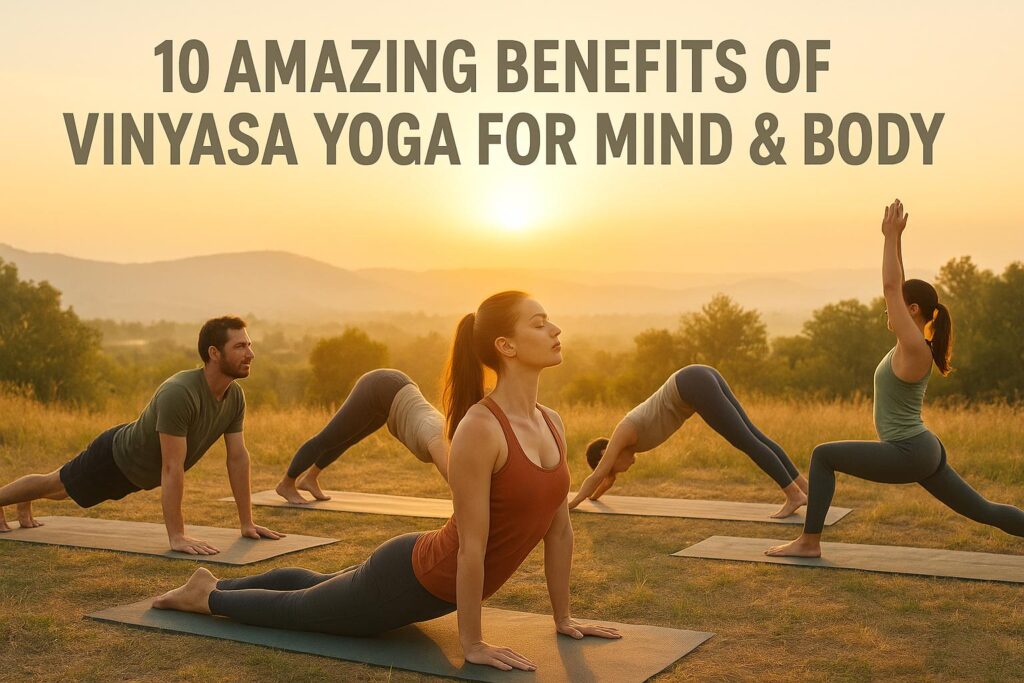
Yoga has transcended boundaries to become the most popular wellness activities all over the world. One of the yoga styles which is known for decades and is considered to be ideal for overall wellness is Vinyasa Yoga. famous for its easy flowing sequences with dynamic energy and synchronized breathing movements, this is the go-to practice for individuals wanting a combination of mindfulness, physical challenges, and creative expressions on the yoga mat.  Unlike some of the static yoga styles in which you have to hold positions for longer durations, Vinyasa is about easy going movements. In Sanskrit, the word Vinyasa means “to place in a special way”. In practice, it refers to linking the different poses together through a continuous flow, guiding them by your synchronized breathing. Every inhale and exhale will act as an anchor to transition from different asanas and create a meditative experience.  Apart from the quality of having flowy sequences, there are other benefits that make Vinyasa yoga so special and impactful. In this blog, you will learn about 10 different benefits of Vinyasa yoga in detail and why this yoga style is worth exploring.  What is Vinyasa Yoga? Vinyasa Yoga is a style of yoga that focuses on linking movement with breath in a smooth, continuous flow. The word “Vinyasa” comes from Sanskrit, meaning “to place in a special way,” and in yoga it refers to a sequence of poses coordinated with inhaling and exhaling. Unlike static styles such as Hatha, Vinyasa is more dynamic and often described as a moving meditation. Each class can be different, but usually includes sequences like Sun Salutations, standing poses, balances, backbends, and seated postures, all woven together with mindful breathing. Key features of Vinyasa Yoga: 1. Builds Full-Body Strength Image Credit: womenshealthmag Most people assume that yoga is only about flexibility. It is indeed true, but to an extent. There are other aspects of yoga and one of them is practicing vinyasa yoga. It is a powerful yoga form for building functional strength in your body which you can use in your daily life. Even a simple sequence of Surya namaskar can activate most of your body muscles. Vinyasa yoga helps in- Over the course of time and with consistent practice, you will start noticing how your arms are having more definition, lower body is getting toned, and you are having a stronger midsection. The strength which you build through this is sustainable and more balanced, so it will not bulk you up but will be supporting endurance, overall balance, and alignment in postures. How to Choose the Right Yoga Teacher Training for You 2. Improves Flexibility and Mobility Image Credit: specsavers Always remember that strength without flexibility can only lead to stiffness and instability. This is the reason why yoga practitioners prefer Vinyasa yoga as it helps in enhancing both mobility as well as flexibility. Each class includes different poses like backbends, twists, hip openers, and forward folds, which will work in lengthening muscles and releasing tightness. This flowing transition of poses will not let your body stuck in a static range of motion. You will ultimately build mobility and better flexibility, through which you can move freely with a controlled motion range.  For individuals who sit in the same position for longer duration at a desk, Vinyasa yoga is going to be life-changing for them. Hip-openers like lizard pose, pigeon pose, and warrior asanas improve the tightness and stiffness caused by sitting. Along with this upper body openers can help in fixing the rounded posture adapted from working on a computer. You don’t have to be naturally flexible in order to practice these asanas. With proper consistency and disciplined practice, you will create space in your body so it can move with ease.  3. Enhances Cardiovascular Health Image Credit: endocrine Vinyasa yoga is one of those yoga styles that can get your heart pumping and enhance your cardiovascular health. The constant flow from one pose to another along with synchronized breathing is going to increase your heart rate in a very controlled way. It is a low impact yet majorly effective cardiovascular workout unlike running or HIIT.  There are some scientific studies that have shown that Vinyasa yoga can improve VO2 max and improve the blood circulation in your body. It means that you will have better stamina, more resilience while doing physical activities, and oxygen will be delivered throughout the body. This yoga style gives you both the workout high and calmness when practiced consistently.  4. Promotes Weight Management There are numerous people who start their practice with Vinyasa yoga as a part of their weight management journey. Since it is a continuous flow of movements, it can burn a huge amount of calories in a 60-minute session. This can be easily compared with cycling or brisk walking. Weight management through yoga is not just about burning calories but about how it impacts your body.  Unlike the crash diets and extreme workout plans, you should always switch to yoga for a sustainable path towards wellness. This way you will not force your body into punishments or unnecessary restrictions and will develop mindful habits that will also work in the future.  How to Prepare for Yoga Teacher Training: What to Know Before You 5. Reduces Stress and Anxiety Image Credit: ibcces One of the biggest benefits of Vinyasa yoga is how it affects your nervous system. In today’s hustle bustle of life, most of us are left in a constant state of light or flight. This leads to overstimulated mind, stress, anxiety, and frequent burnouts. Vinyasa yoga helps in providing that shift into your rest and digest mode very easily. When you start synchronizing your breathing with the flow of movements, it becomes the key technique for stabilizing your mind and body.  When you breathe deeply during your session, your body receives signals that it is safe. Your cortisol levels drop and your mind slows down to unwind itself completely. Various studies have shown that yoga

Yoga, Blog

How to Choose the Right Yoga Teacher Training for You

One of the biggest steps before becoming a certified yoga teacher is to choose the right program according to your requirements. It is not just about the certification but about your investment of time, energy, and money. The right yoga teacher training is responsible for shaping your life ahead and supports you to achieve all your health goals.  There are thousands of yoga schools available across the globe. All of them provide certified YTT programs with deep knowledge and hands-down practice. Some of them might focus on mentorship and brushing up your teaching skills, while some schools may emphasize on strengthening the foundations and learning all the aspects of yoga. So now the question arrives- which yoga teacher training program should you prefer? The answer lies within you. You need to self-analyze and ask yourself about your requirements and expectations from the YTT program. Look beyond the glossy marketing and understand the benefits of the program and whether it suits you or not. This is a detailed guide which will tell you some points which are essential while choosing the right yoga teacher training for yourself.  Understand your Purpose Before you jump into researching the yoga schools and destinations for YTT programs, ask yourself, why do you wish to join the yoga teacher training? Your answer will be your purpose and will act as a compass to guide your path through the entire journey. When you have a clear reason for joining the program, every decision you make regarding it will be clearer and better.  Choose a program that focuses majorly on teaching methodologies if you wish to teach yoga professionally in the future. This will help you to understand the different asanas along with learning the skills required for teaching. Select a program that incorporates hands-on practice teaching and real-time feedback from the instructors. Take the module sessions which are about sequencing and designing the classes according to the level of students attending your session. It will also teach you the business side of teaching yoga, which includes marketing yourself and creating a sustainable career for your yoga teaching.  If you aim to improve your personal practice and have overall wellness growth, then join a program which teaches yoga beyond the surface level. Choose a course which teaches meditation, yogic philosophy, and pranayama in depth while giving you insights about how to live yoga. These programs will guide you to the real purpose and practices on and off the yoga mat. Various yoga schools provide well-structured YTT programs which perfectly splits between the personal practice and providing special tools for refining your teaching skills.  Location Matters One of the most important yet often overlooked factors while selecting a YTT program is the location. Where you train directly impacts your overall experience and transformation. Some destinations are globally known for their rich yogic heritage and serene natural settings—like Rishikesh, Goa, and Kerala in India, or Bali, Thailand, and Costa Rica. These places not only provide authentic yoga education but also immerse you in environments that naturally inspire mindfulness and self-reflection. For example, Rishikesh is often called the Yoga Capital of the World, attracting seekers from across the globe to learn yoga at the banks of the holy Ganges. Kerala offers a tranquil, Ayurveda-inspired setting for those who want healing alongside training, while Goa combines a relaxed beach vibe with traditional yoga teachings. Choosing a location that resonates with your personality and goals—whether it’s mountains, beaches, or urban centers—can enhance your focus, deepen your connection with the practice, and help you build lifelong memories. While finalizing the destination, also consider practical aspects like climate, cost of living, accessibility, cultural fit, and whether you prefer a traditional ashram-style environment or a modern retreat-style yoga school. A thoughtfully chosen location creates the right energy for your yoga journey and makes your training experience unforgettable. Know the Different Levels of Yoga Teacher Training YTT programs are based on different levels, starting from beginner level to the advanced one. The 200-hour YTT program is the basic program that teaches you the foundations of yoga and its deep purpose. This course is best for getting introduced to some essentials like basic anatomy, asanas, philosophy, meditation, teaching methodology, and pranayama. Graduating from a 200-hour yoga teacher training program signifies that you can start teaching yoga professionally to others. This is a compulsory program to consider if you wish to have a professional career in yoga.  After completing the beginner-friendly program, if you want to deepen your understanding and wish to brush up your teaching skills, then choose the advanced level 300-hour YTT program. This level of program is meant for practitioners who have successfully graduated from the fundamental program and want specialized practices. It is an advanced program focusing on refined sequencing, dynamic poses, deep philosophy, and hands-on practices. If you wish to make yoga your lifelong path, then consider taking the comprehensive 500-hour yoga teacher training program. It is perfect if you wish to complete both the foundational as well as advanced level course in one continuous program. This is considered to be the highest level of YTT program one can complete which reflects your commitment as well as discipline towards yogic practices.  Analyze the Curriculum Evaluating the curriculum while choosing the right YTT program is an important thing to consider. The perfect program is not only about teaching to perform yoga poses but also to provide you a well-rounded learning of yogic lifestyle and its importance. A YTT program with a strong curriculum will help you to learn different asanas, teach you how to align your body perfectly and practice safely without injuring yourself. It also consists of teachings about anatomy and physiology, which will ultimately tell you how your body works. This in-depth knowledge is necessary if you wish to guide others responsibly.  Another essential aspect of a yoga teacher training program is to study yogic philosophy. Understand the real purpose behind these practices and how they reform your overall wellness. The classical

How Much Time Does It Take to Become a Certified Yoga Teacher
Blog, Yoga

How Much Time Does It Take to Become a Certified Yoga Teacher?

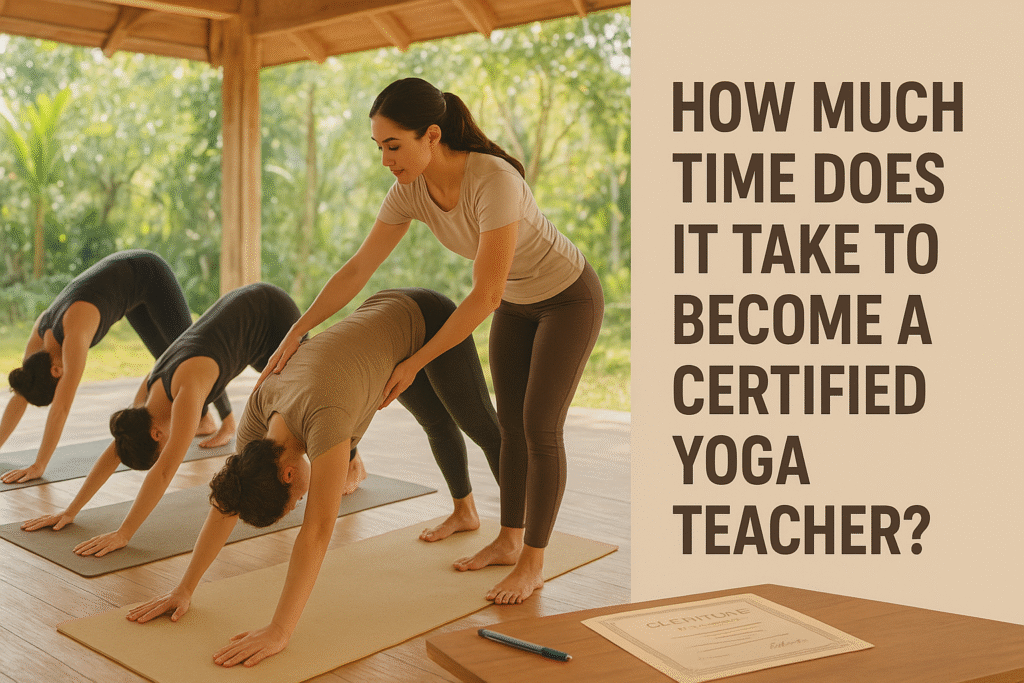
The journey of becoming a certified yoga teacher from a mere student is more than a career move. It is a personal transformation and about turning your passion for wellness into a life path for others. To answer the question- How much time does it take to become a certified yoga teacher? You need to understand that the duration of your certification depends on various reasons like our intentions, yoga style, training level, and structure of your program. In order to become a certified yoga instructor, you need to graduate from at least the foundational 200-hour yoga teacher training program, from a yoga school which is Yoga Alliance certified.  In this article, you will learn about how different factors influence the timelines of the certification course and what is the preparation phase as well as progression phase for that. This blog will be an inspiration for you to complete your yoga teacher training in order to receive the global certification.  Understanding What “Certified Yoga Teacher” Means Before learning about the time duration of yoga teacher training programs, you need to understand what is the meaning of a certified yoga teacher. Someone who has successfully completed their yoga teacher training program according to the standards and credibility of the Yoga Alliance, USA, is considered as a certified yoga teacher. Yoga Alliance is a global non-profit organization that sets the curriculum, requirements, and standards for different yoga training levels.  You will get “Certified” once you graduate from the foundational 200-hour Yoga Teacher Training program and receive the RYT 200 certification from the Yoga Alliance. Certification here means more than just receiving the certificate, it signifies that you are credible enough to teach yoga to a classroom full of students, effectively. This also ensures that you are trained and skilled enough to provide safe, supportive, and ethical guidance to your students.  So, How Long Does It Take to Become a Certified Yoga Teacher? Becoming a certified yoga teacher typically takes 200 hours of training, which can be completed in 3 to 4 weeks full-time (intensive residential courses) or spread over 3 to 6 months part-time. For advanced certifications, such as 300-hour or 500-hour YTTC, it may take several additional months of dedicated practice and study. The exact timeline depends on the program format, your learning pace, and how deeply you wish to advance in your yoga journey. The cost of these yoga courses vary from each other. Different Levels of Certification and Their Impact on Time There are different levels of yoga teacher training programs which play a vital role in determining the time period for your certification. For understanding the key factors that influence this duration, first learn about the three important levels of YTT programs, recognized by the Yoga Alliance, USA.  200-Hour Yoga Teacher Training (RYT 200) The 200-hour YTT program is the first and most fundamental training provided to individuals who wish to learn about yoga. If you are interested in becoming a certified yoga teacher or want to gain insights about yoga for your personal transformation, this is the ideal training program to consider. The curriculum provides all the basic teachings of every aspect of yoga along with daily sessions of asanas, yogic philosophies, teaching methodologies, etc. Depending on the format of your training program, the 200-hour YTT course can typically take up to 3-5 weeks to complete, especially in a residential setting. The 200-hour yoga training program is recognized by the Yoga Alliance, USA, and after its completion they also provide you the RYT 200 certification, which reflects your skills and reliability.  Here you will cover-  300-Hour Yoga Teacher Training (RYT 300) The 300-hour YTT is an advanced-level program for the individuals who have completed their basic 200-hour training and wish to learn more deeply about yoga. This is for the certified teachers who want to brush up their skills more, before starting their professional career as a yoga teacher. The 300-hour YTT program is specifically designed to provide in-depth knowledge about all the different aspects of yoga.  The program is accredited by the Yoga Alliance and once you have completed the training successfully, they award you with the RYT 300 certification, which signifies your credibility and ability to teach anywhere in the world. If you are taking the intensive residential training program, then it might last to around 4-8 weeks, while the part-time course can extend up to 4-8 months.  They cover- 500-Hour Yoga Teacher Training (RYT 500) The 500-hour YTT program is a comprehensive training course which consists of the curriculum of the foundational 200-hour and the advanced level 300-hour teacher training. It is recognized by the Yoga Alliance and you are provided the RYT 500 certification after its completion. You can either complete both the 200 and 300-hour programs consecutively or after taking a break, in order to receive this certification. As a comprehensive intensive program, the 500-hour YTT will take up to 3 months to complete. The entire curriculum for this is based on the basic 200-hour and the advanced level 300-hour training program.  Specialized and Short Courses There are some specialized courses and short programs which teach you the basics of yoga. They are either focused on a particular yoga style or provide you with a basic understanding of the yogic world so that you can prepare yourself for the certified yoga courses.  There are also shorter programs such as: Key Factors That Influence the Duration of Teacher Training There are some important factors that influence the time period of becoming a certified yoga teacher.  1. Training Format (Full-Time vs. Part-Time) An immersive residential program is also said to be a full-time program where you will be staying in the training facility till your course is completed. The duration for these programs can range between 3-5 weeks for a 200-hour YTT program. Joining a full-time YTT program is ideal for people who can manage a month off from their respective work or family responsibilities.  If you are someone who cannot afford to

yoga teacher training cost
Yoga

How Much Does Yoga Teacher Training Cost (100, 200, 300 & 500 Hours)

Yoga Teacher Training (YTT) is more than just a course—it’s a journey that transforms both your practice and your perspective. Some join to deepen their understanding of yoga’s philosophy and traditions, while others aim to earn certification and guide students in their own classes. Whatever the goal, one thing is certain: it’s a meaningful investment of time, energy, and money. Knowing the yoga teacher training cost in advance helps you plan wisely and choose the right program for your needs. In this guide, we’ll break down the factors that influence pricing and what to expect for different formats and locations. Why Invest in Yoga Teacher Training? Joining a yoga teacher training program is not only about becoming a certified yoga teacher but also about having a completely transformational experience. It changes the way you think, you live your life, you breathe, and relate to the world surrounding you. At the core of this training, you learn that yoga is all about self-enquiry. This teacher training program provides you the ideal space and structure so that you can explore your inner world.  Yoga teacher training sharpens your understanding regarding every asana you practice. You learn about your bodily needs and practice movements accordingly. You dive into the depths of yogic philosophy and get introduced to different styles of yoga like Ashtanga, Hatha, Kundalini, Yin, and Vinyasa. This helps in broadening your perspective towards what resonates with you the most. After the completion of your training program, you receive the Internationally Certified RYT certification that reflects your credibility as a yoga teacher.  If you wish to pursue teaching yoga professionally, then investing in a yoga teacher training program is the ideal option to consider. This will be your launchpad where you will learn how to guide the students, create sequence classes, provide a safe environment for practicing hands-on alignment, and giving real-time feedback. Always remember that you are not doing this alone. There are several individuals from different backgrounds and countries who participate in these training programs just like you do.  Overview Table for the Cost of YTT Programs Below is the overview of the cost of yoga teacher training programs according to the locations and level of training.  Training Program India (Residential) US/Europe (Residential) Online Format 100 Hours $250–$1,200 $400–$2,000 $200–$800 200 Hours $800–$2,500 $1,200–$5,000 $400–$1,500 300 Hours $1,200–$3,000 $2,000–$7,000 $700–$2,000 500 Hours $2,000–$5,000 $4,000–$8,000 $1,500–$3,000 100-hour Yoga Teacher Training   100-hour yoga teacher training is the entry point certification which is not certified by the Yoga Alliance but is considered as the first half of the 200-hour yoga teacher training program. This program lasts for around 2 weeks and is ideal for complete beginners.  Cost Insights for 100-hour YTT program   India: Shared accommodation and three course meals are included along with daily yoga/meditation sessions; typically ranges from INR 12,750–25,500 ($250–$400). US/Europe: If outside India, then prices might vary according to the locations and amenities provided, ranging from $400–$2,000. Online: If you are taking online sessions for 100-hour YTT then expect the cost ranging approximately $200–$800.  Why do people choose it? This program is ideal for individuals who wish to taste practice before committing to a certified teacher training program.  200-hour Yoga Teacher Training   The 200-hour YTT program is the fundamental program required to become a certified yoga instructor. It is accredited by the Yoga Alliance and teaches all the necessary foundational aspects of yoga. It has a curriculum that includes daily yoga asanas along with pranayama and meditation, yogic philosophies, teaching methodologies, and hands-on practicum. Once you have completed the program, you will receive the RYT 200 certification through Yoga Alliance as it will signify that you are a qualified and certified yoga teacher.  Cost Insight for 200-hour YTT program-   India: Ranges from $800 to $2,500. This includes the accommodation facility, three course meals, and other essential amenities. Major centres of YTT programs in India are Goa, Rishikesh, Mysore, Kerala, and Dharamshala. US/Europe: Ranges from $1,200 to $5,000+. This happens because of the higher cost of living as well as facilities provided. You might get luxurious venues, smaller and more focused classes, and bigger names.  Online: Begin from as low as $400. You can access the recorded lessons and learn as per your availability. Why do people choose it? Yoga practitioners who wish to pursue yoga as their professional career have to necessarily join the 200-hour YTT program as it is the fundamental certification program. Every individual graduating from the program receives the RYT 200 certification which proves their credibility of becoming a yoga instructor.  300-hour Yoga Teacher Training    The 300-hour yoga teacher training program is the advanced course for the individuals who have completed the fundamental 200-hour YTT program. It is designed specifically to deepen the understanding about different yogic aspects which will ultimately make you an extremely qualified yoga instructor. It has a curriculum which also includes anatomy, physiology, class sequencing, yogic philosophy, daily asana practice, and advanced teaching skills.  Cost Insight for 300-hour YTT program   India: Ranges between $1,200–$3,000. The program includes all-inclusive residential courses along with providing necessary amenities.  US/Europe: In other countries, the cost might range between $2,000–$7,000. This is because of the internationally recognized faculty and other luxury amenities provided by the yoga schools. It might vary according to the school and destination you choose.  Online/Hybrid: You can also choose the online or hybrid format of yoga teacher training program, which ranges from $700 to $2,000. It majorly depends on the length of your course, popularity of the yoga schools and the quality of their classes.  Why do people choose it? Yoga practitioners who have already graduated from the foundational 200-hour yoga teacher training program and wish to expand their understanding in this field can join this. It will help you to become an even better certified yoga instructor, with increased credibility. Once you complete the program, you will receive the certification which can be used for teaching yoga anywhere across the globe.  500-hour Yoga Teacher Training  

Scroll to Top