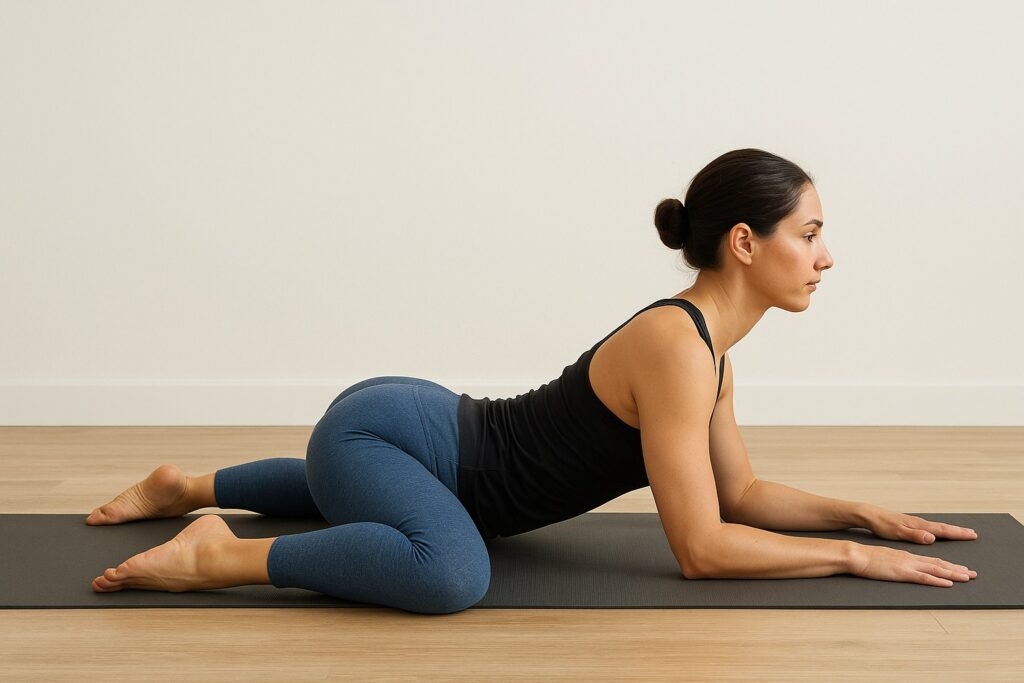
I’ve been practicing yoga for years now, and one pose that has truly transformed my hip flexibility is Mandukasana, commonly known as Frog Pose. The name comes from the Sanskrit word “Manduka,” which means frog—and when you’re in this pose, you’ll understand exactly why. Your body mimics the wide-legged, grounded posture of a frog resting on the ground.
What I love about Mandukasana is how accessible yet challenging it is. It’s become incredibly popular in modern yoga practices because of its powerful hip-opening qualities. Whether you’re working on flexibility, pelvic mobility, or just trying to undo hours of sitting at a desk, this pose delivers.
The best part? Almost anyone can practice it. I’ve seen complete beginners ease into modified versions, while advanced practitioners push deeper into the stretch. It’s truly a pose that meets you where you are.
How to Do Mandukasana: Step-by-Step Guide

Preparatory Steps
Before I dive into Frog Pose, I always make sure my body is properly warmed up. Trust me, attempting this on cold muscles is not a pleasant experience. I typically start with some gentle hip rotations, moving my hips in circles to wake up the joints.
Then I’ll spend a few minutes in Butterfly Pose, letting my knees drop to the sides while I breathe into my hips. Cat-Cow stretches are also essential—they warm up my spine and pelvis, preparing my body for the deeper opening ahead.
The golden rule I follow: never rush into Mandukasana without warming up. Your hips and knees will thank you for the preparation.
Step-by-Step Instructions
Step 1: I begin on my yoga mat in tabletop position—hands directly under my shoulders, knees under my hips. This is my stable starting point.
Step 2: Slowly, I begin to widen my knees. I move them apart as far as feels comfortable, not forcing anything. Some days I can go wider than others, and I’ve learned to honor that variation.
Step 3: I make sure my ankles are aligned with my knees, and I flex my feet so my toes point outward. This alignment is crucial for protecting my knee joints.
Step 4: Depending on my flexibility that day, I’ll either lower down onto my forearms or, if I’m feeling more open, bring my chest closer to the mat. I never force myself to go lower than my body allows.
Step 5: Here’s where the magic happens—I engage my core slightly to support my lower back, then consciously relax my hips, allowing gravity to do the work. I’m actively passive, if that makes sense.
Step 6: I hold the final position, wherever that is for me, and focus on my breath. Deep, steady inhales and exhales help me soften into the stretch rather than fight against it.
Step 7: To release, I very slowly walk my hands forward, shift my weight, and gently bring my knees back together. I never rush this exit—it’s just as important as entering the pose.
Also Read: The Basics of Hatha Yoga: 10 Classic Poses for Strength and Balance
Common Mistakes to Avoid
I’ve made plenty of mistakes with this pose, especially when I was eager to go deeper faster. One major error I see often is dropping into the lower back. When I let my spine sag, I lose all the benefits and risk hurting myself.
Overstretching the knees is another trap I’ve fallen into. If my knees start to hurt—not just stretch, but actually hurt—I know I’ve gone too far. I’ve learned to respect that signal.
Collapsing my chest or shoulders used to be my default, but I realized it compromises the pose’s integrity. Now I focus on maintaining length through my spine, even when I’m folded forward.
And here’s something I do unconsciously when uncomfortable: holding my breath. I have to consciously remind myself to keep breathing. The breath is what allows the opening to happen.
Modifications & Variations
When I’m teaching beginners or when my own hips are particularly tight, I always suggest using props. Placing cushions or folded blankets under the knees makes a world of difference. It reduces pressure and allows you to stay in the pose longer without discomfort.
Half Frog Pose is my go-to recommendation for newcomers. Instead of widening both knees, you keep one leg extended behind you. This allows you to experience the hip opening on one side without overwhelming your body.
For those days when I want to go deeper, I use blocks under my chest. This advanced variation allows me to sink my hips lower while maintaining proper upper body alignment.
During my pregnancy, I practiced a wide-knee supported version with lots of bolsters. It gave me the hip opening I craved without putting pressure on my belly. Always listen to your body and consult with a prenatal yoga instructor if you’re expecting.
Also Read: Top 10 Best Sitting Yoga Asanas Images With Names: A Complete Guide
Benefits of Mandukasana

Physical Benefits
I cannot overstate how much Mandukasana has improved my hip joint mobility. After years of sitting at a desk, my hips were locked up tight. This pose has been instrumental in restoring movement and freedom to that area.
The stretch I feel in my inner thighs, groin, and pelvic muscles is intense but incredibly satisfying. These are areas we rarely stretch in daily life, and Mandukasana targets them all at once.
My overall lower body flexibility has improved dramatically since incorporating this pose into my practice. I notice the difference when I walk, run, and even just move through my day.
What surprised me most was how it strengthened my glutes and core. While it’s primarily a stretch, maintaining proper form requires significant muscular engagement. My posture and spinal alignment have improved as a result.
Therapeutic Benefits
On days when my lower back is tense from stress or poor posture, Mandukasana provides genuine relief. The hip opening indirectly releases tension that radiates into the lower back.
I’ve spoken with many women who swear by this pose for menstrual discomfort. While I can’t make medical claims, I personally find that the gentle compression and opening in the pelvic region provides comfort during my cycle.
There’s something about deep hip opening that releases stored emotions and stress. I’ve had moments in this pose where I’ve felt waves of anxiety melt away. It’s not just physical—there’s a profound energetic release that happens.
The gentle compression on the abdomen also seems to support digestion. I notice that practicing Mandukasana regularly keeps things moving, if you know what I mean.
Benefits for Athletes & Desk Workers
As someone who spends hours at a computer, this pose has been a lifesaver. Sitting for long periods creates chronically tight hips, and Mandukasana directly counteracts that pattern.
I’ve also worked with runners who’ve incorporated this pose into their routine. The hip flexor opening it provides helps prevent the tightness and imbalance that often comes from repetitive forward motion.
Whether you’re an athlete or a desk worker, improving your range of motion in the hips affects everything else you do. I move more freely and with less pain since making Frog Pose a regular practice.
Also Read: 12 Poses of Surya Namaskar with Names and Benefits
Precautions & Contraindications
I need to be clear about when not to practice this pose. If you have any knee injuries or have recently had knee surgery, Mandukasana is not for you. The pressure and angle can aggravate knee issues.
People with severe hip pain should also avoid this pose or work with a qualified instructor to modify appropriately. There’s a difference between the discomfort of stretching and the pain of injury, and you need to know which is which.
During pregnancy, I practiced very carefully and always with props. If you’re pregnant, please consult with a prenatal yoga instructor before attempting this pose. Your body is changing rapidly, and what worked last month might not work now.
Groin strains need time to heal, and Mandukasana will only set back your recovery. Be patient and wait until you’re fully healed.
Finally, never practice this pose on cold muscles. I always make sure I’ve warmed up with at least 10-15 minutes of gentle movement or after a full yoga flow.
Practice Tips for Safe & Effective Mandukasana
The number one tip I can give you: never force your knees apart. This isn’t a competition. I move slowly and incrementally, letting my body gradually open over time.
Using props isn’t cheating—it’s smart practice. I keep blankets and cushions within reach to avoid unnecessary pressure on my joints.
I keep my breath long and steady throughout the pose. When I notice my breathing getting shallow or held, it’s a sign I’m pushing too hard.
Keeping my hips aligned and avoiding the temptation to arch my back has been crucial for me. I imagine my pelvis as a bowl of water that I don’t want to spill—this helps me maintain proper positioning.
I hold the pose anywhere from 30 seconds to 2 minutes, depending on how my body feels that day. There’s no magic number—it’s about quality, not duration.
Exiting slowly is just as important as entering mindfully. I take my time walking my hands forward and bringing my knees together, giving my joints time to readjust.
Also Read: Yoga Poses for Two People: A Guide to Couple Yoga
Anatomy Focus
From an anatomical perspective, Mandukasana activates several key muscle groups. My adductors (inner thigh muscles) get a deep stretch, while my glutes engage to support the position.
The hip rotators—those often-neglected muscles deep in the hip—also get significant activation. My core muscles engage to protect my spine and maintain proper alignment.
The primary joints involved are the hips and knees, which is why proper alignment is so crucial. I’m asking these joints to move in ways they don’t normally move in daily life.
Energetically, I feel this pose stimulating my Muladhara (Root Chakra) at the base of my spine and my Sacral Chakra in the pelvic region. There’s a grounding and creative energy that flows when I practice Mandukasana regularly.
Contraindications to Keep in Mind
Let me summarize the situations where you should skip this pose. Knee problems of any kind are a red flag. The position places significant stress on the knee joint, and if you’re already dealing with issues, don’t risk it.
Hip injuries also fall into this category. If you’re recovering from a hip injury or dealing with conditions like hip impingement, work with a physical therapist or experienced yoga instructor before attempting Frog Pose.
Severe lower back issues require caution. While the pose can help mild back tension, serious conditions like herniated discs might be aggravated by the hip positioning.
Sciatica is tricky. Some people find relief, while others experience increased pain. I would never attempt this without guidance from an expert if you’re dealing with sciatic nerve issues.
Also Read: 10 Amazing Benefits of Vinyasa Yoga for Mind and Body
Final Thoughts
Mandukasana has become one of my non-negotiables for hip mobility. In a world where we sit far too much and move far too little, this pose offers a powerful antidote to tight, restricted hips.
I incorporate it into my practice at least three times a week, usually toward the end of my session when my body is fully warmed up. On particularly tight days, I’ll spend several minutes in the pose, breathing and softening.
As for progressing safely, my advice is simple: be patient. I didn’t achieve my current range of motion overnight. It took months of consistent, mindful practice. Some days I could go deeper; other days I needed to back off. Both are part of the journey.
Start where you are, use props liberally, and never sacrifice form for depth. Your hips will open when they’re ready. Trust the process, honor your body, and enjoy the transformation that Mandukasana brings to your practice and your life.